A university library is more than a collection of books. It is a landscape, one with its own topography, climate, and rhythm of activity, noise and stillness. To move through it is to move through stages of thought itself: from the buzzing energy of collaboration at its entry, to the deep, uninterrupted quiet of solitary study at its summit. When Hassell was engaged to undertake the interior fitout design for Level 1 of the Reid Library at the University of Western Australia, the challenge was not simply one of aesthetics, It was one of creating cultural connections through thoughtful design. Publik was brought in to develop the wayfinding signage and environmental graphic strategy. From the outset, it was clear that the work needed to be rooted in something deeper than navigation.
Connection Beyond Boundaries
Hassell’s design directive, Connection Beyond Boundaries, became the conceptual spine of the design that followed. The interior could not exist in isolation from the world outside its walls or ignore the First Nations culture embedded in through the landscape, sky, waterways and trees that define this corner of Noongar Boodja. A narrative was required to draw the outside in, layer meaning onto space, and give students not just a place to study, but a journey to take flight on.
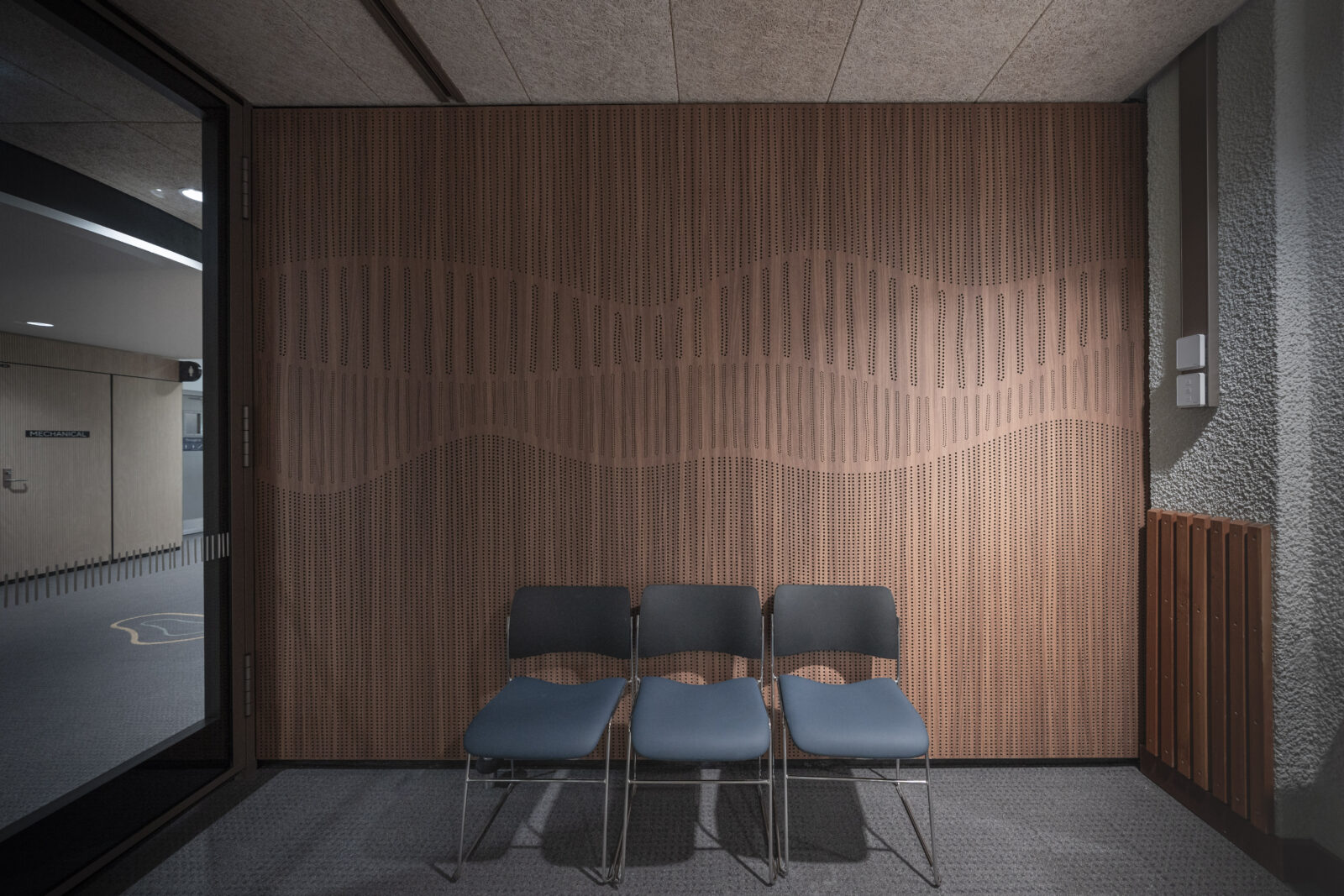
In collaboration with Nani Creative, and with design direction by Publik, a suite of environmental graphics was developed linking each level of the library to a specific element of the natural world beyond its walls, tracing the arc of the student journey from arrival to achievement.
The narrative unfolds across four levels, each one quieter than the last, reaching further from the ground and deeper into thought.
Ground Level – The River
Every journey begins at the water’s edge. Ground level is the Derbarl Yerrigan (the Noongar name for the Swan River) alive with movement, energy, and gathering. This is where new students arrive, where voices overlap, where collaboration sparks and ideas begin to stir. The environmental graphic here speaks to the individual at its centre, with ripples radiating outward, a visual reminder that every student, every idea, sends waves into the world around them. This is a place of high energy, meeting and learning together. The river in full flow.
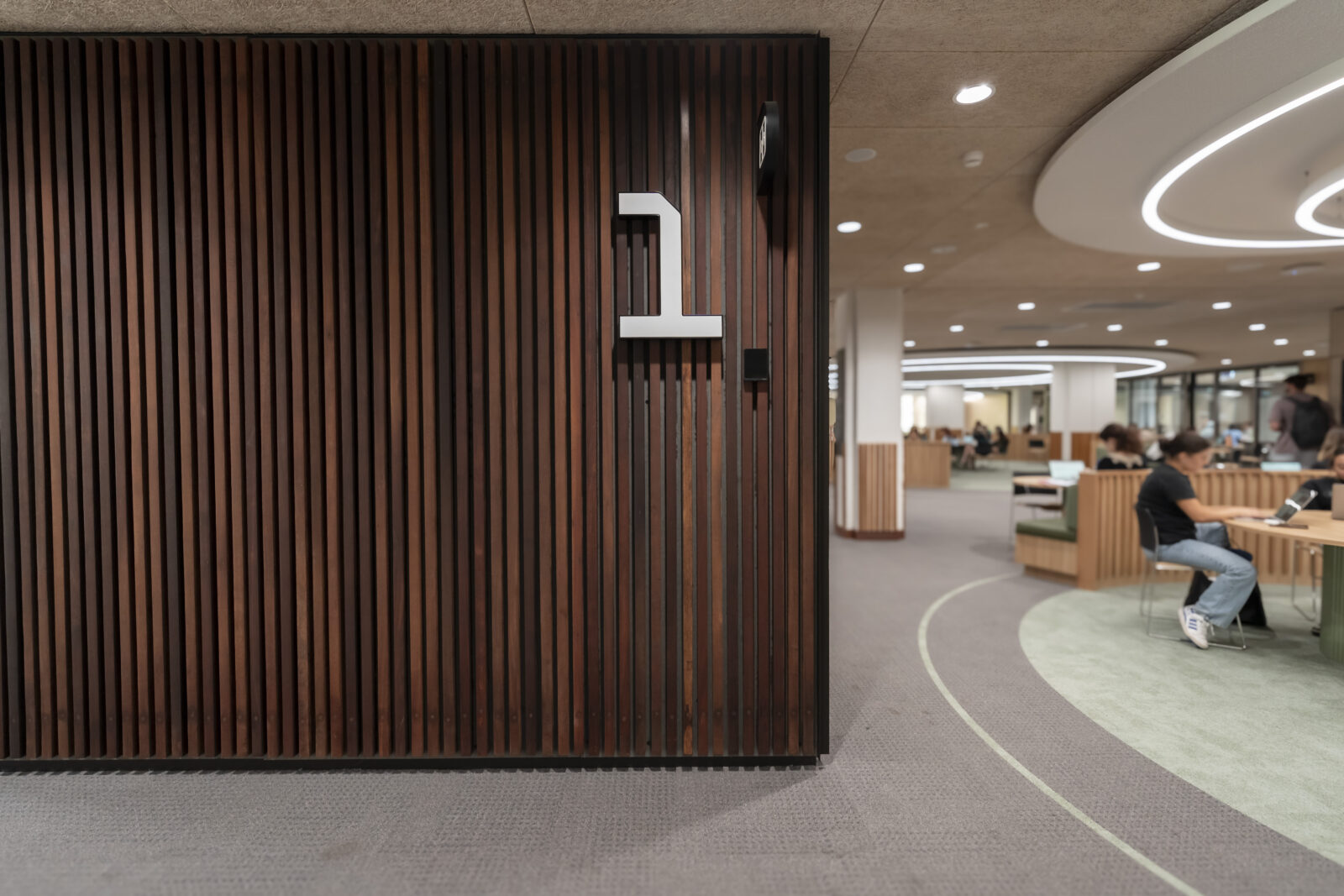
Level 1 – River Reeds
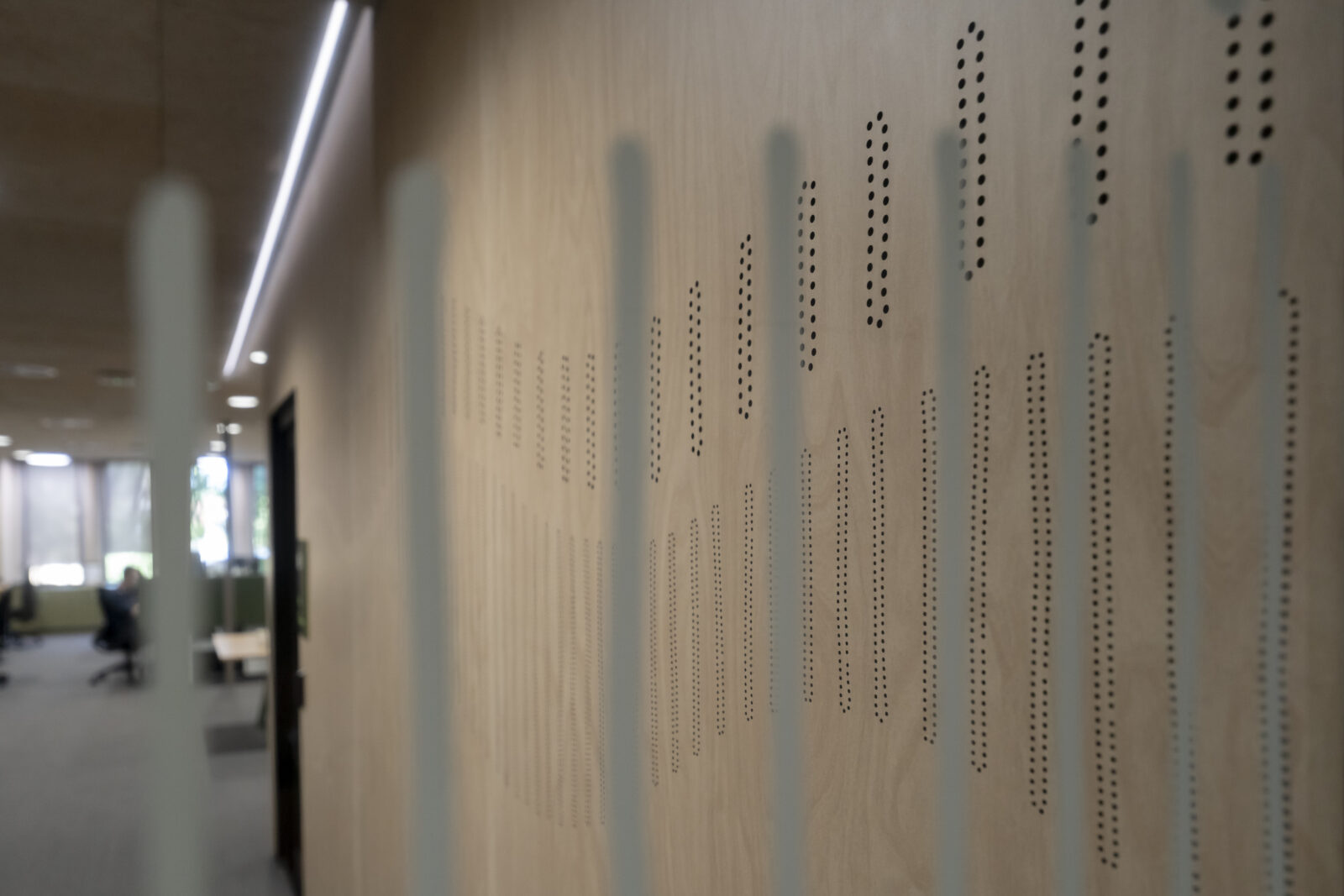
Moving upward, the energy begins to settle. Level 1 is the river reeds, those quiet, resilient forms that line the water’s edge and absorb the noise of the current behind them. The reeds act as a buffer, drawing the activity of the ground floor into something softer and more considered. Here, ideas that were sparked below begin to take shape. Smaller collaborative spaces invite focused conversation; many individual threads weave together, as reeds do, to form something unified and purposeful. The space is quieter, but still alive with the hum of shared endeavour.
Level 2 – Marri Trees
Higher still, the reeds give way to the strength and reach of the Marri trees. Level 2 is where individual study comes into its own, where the student steps back from the group and begins to find their own path through the forest of knowledge. The branching forms of the Marri speak to decision and direction: each branch a possible path, each fork a choice made on the journey toward independent thought. This level is quiet, but not silent. It holds the focused energy of minds in motion, one-on-one conversations with peers and mentors, and the next chapter of a learning journey beginning to come into view.
Level 3 – Sky and Stars
At the top, the canopy opens and the sky appears. Level 3 is a place of stillness. Silent, contemplative, and charged with the quality of thought that comes only at the furthest remove from the everyday. Like stars viewed between branches, students here are simultaneously reflecting on the distance they have travelled and orienting themselves toward what lies ahead. This is a space for solitude, deep focus, and the work that can only happen when the world falls away. A place where wisdom is not gathered, but earned.
The Ground Beneath the Building
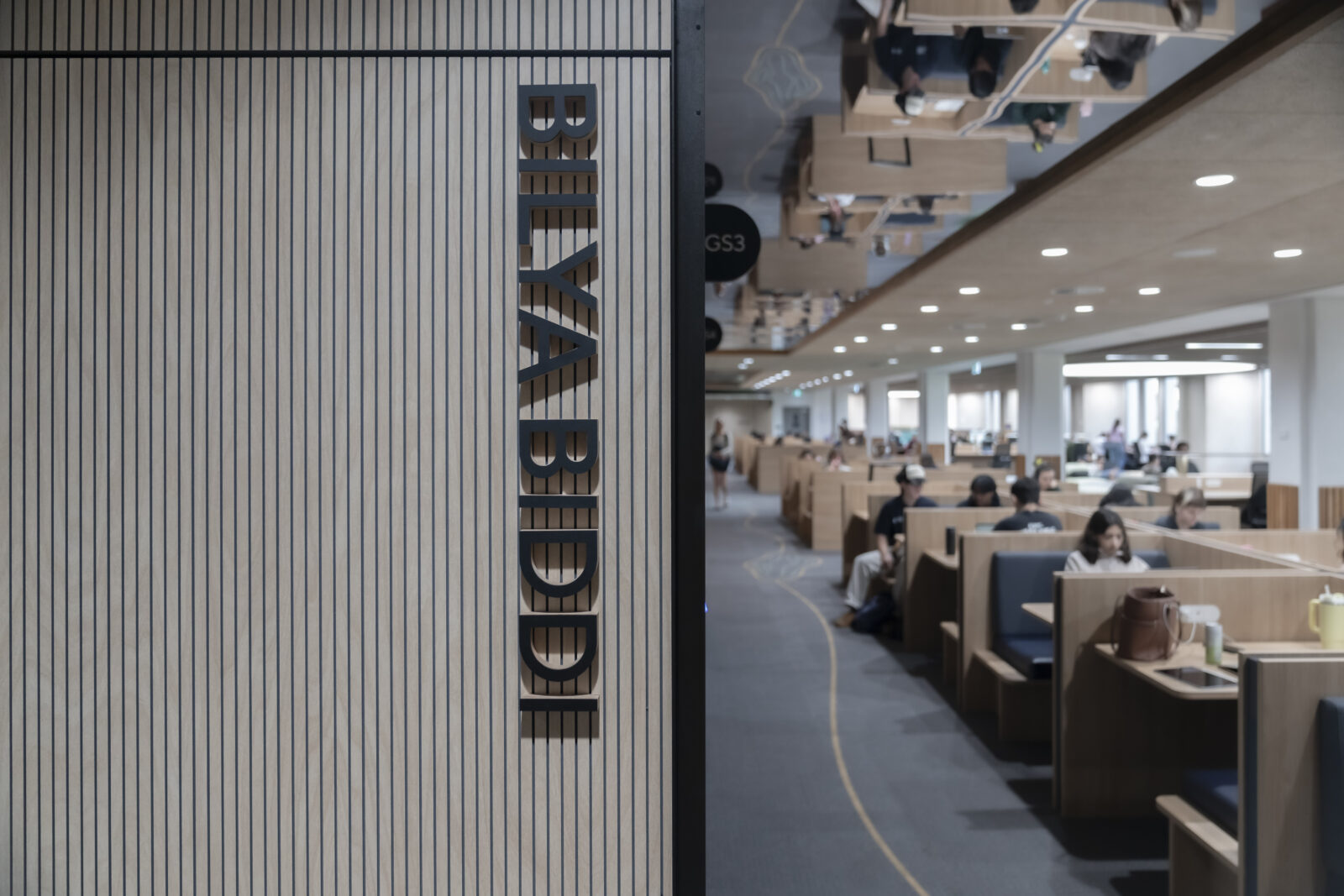
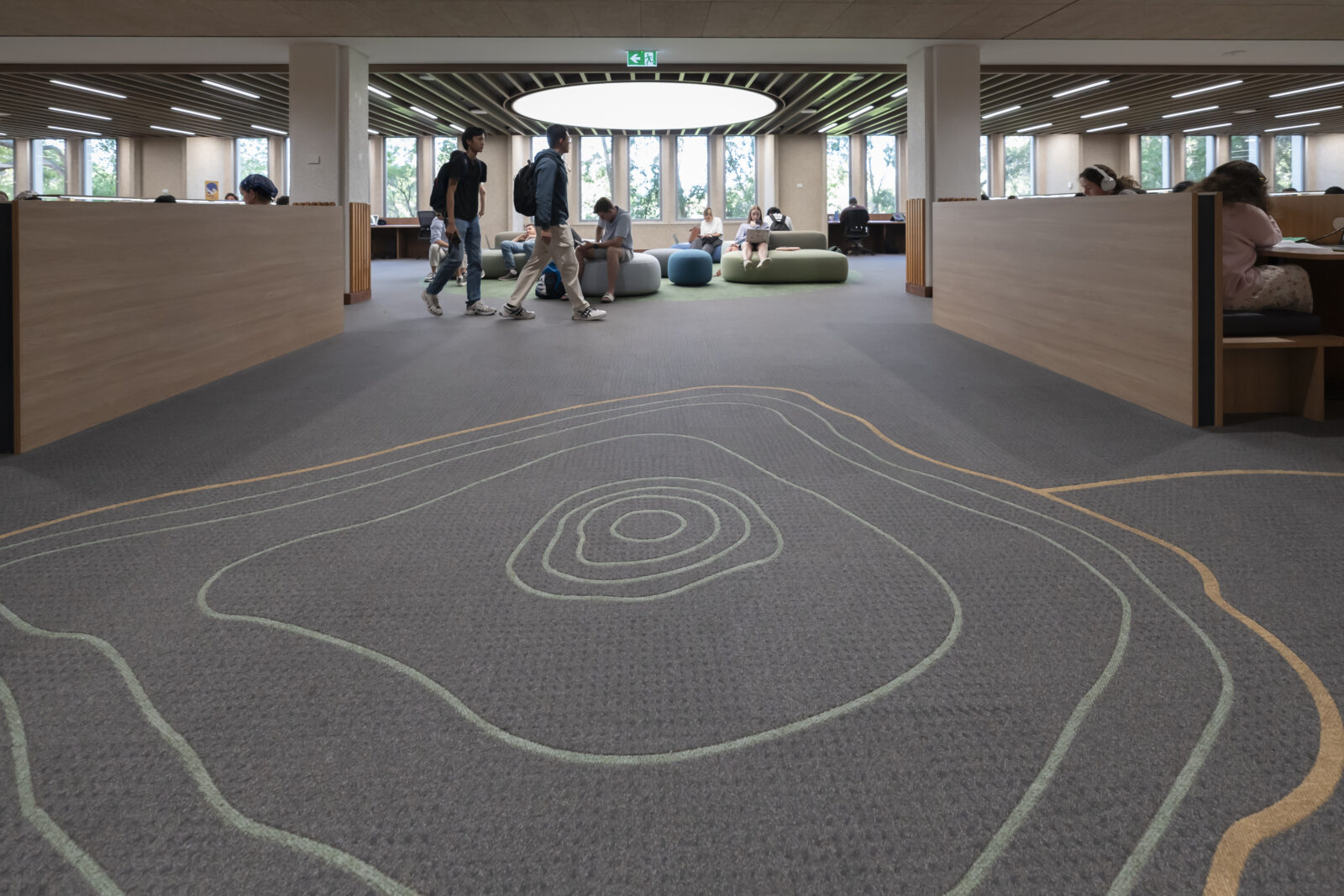
Woven through the environmental graphic strategy is an acknowledgment of what existed here long before the library and before the university itself. The Bilya Bidi, a cultural pathway etched into the landscape by the creek-like waterways that once threaded across this country, was a lifeline for Noongar people, providing access to the Derbarl Yerrigan and connecting communities across the land.
A meandering linework, interpreted from the form of the Bilya Bidi, is woven into the carpet detailing, a pathway underfoot, quiet but ever-present. Above the visitor, that same artwork is reflected through polished stainless steel ceiling panels, creating a moment of quiet revelation: the cultural landscape mirrored in the architecture, the past made visible in the present. To walk through the space is, in a small but genuine way, to walk in the footsteps of those who came before.
Colour as Orientation
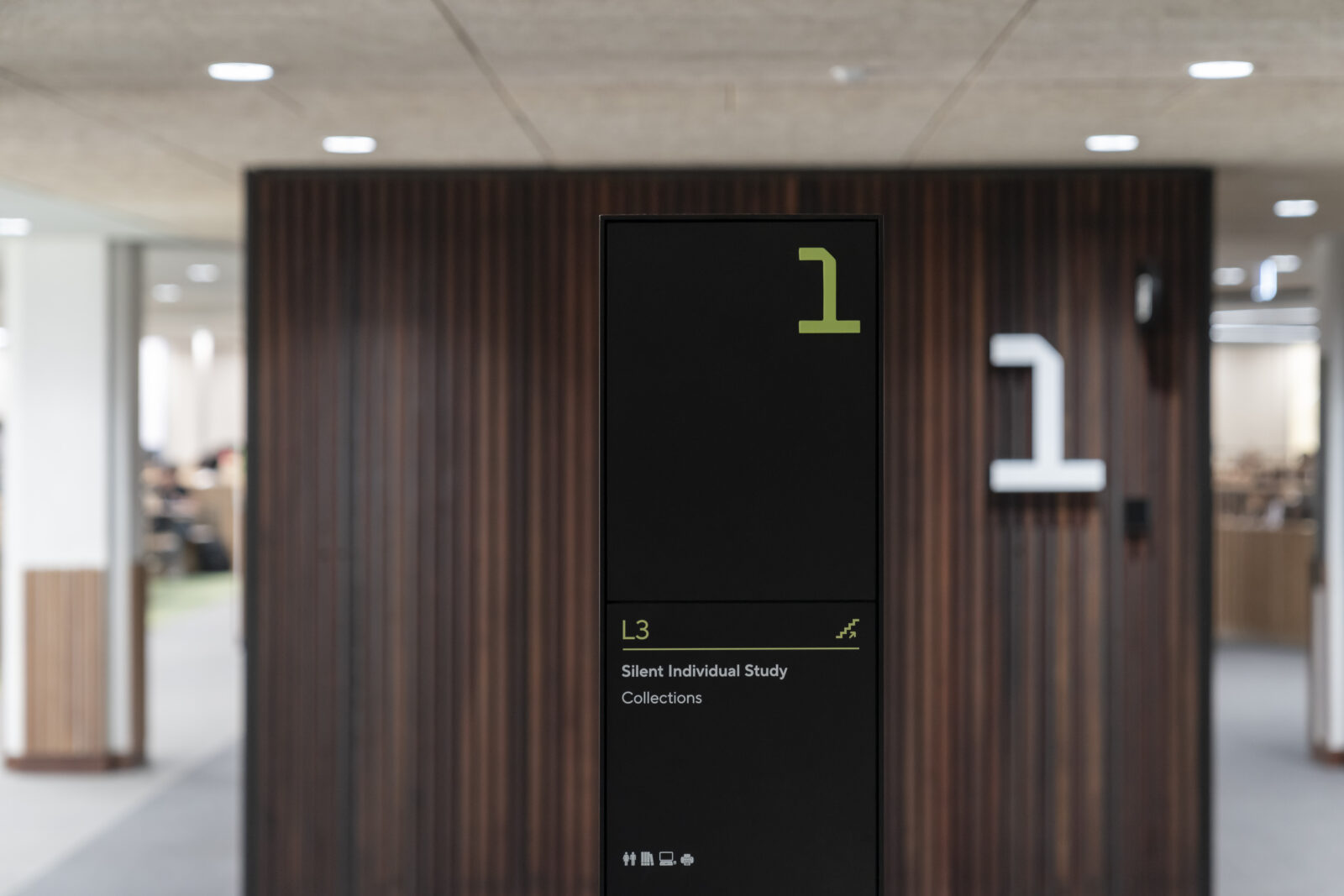
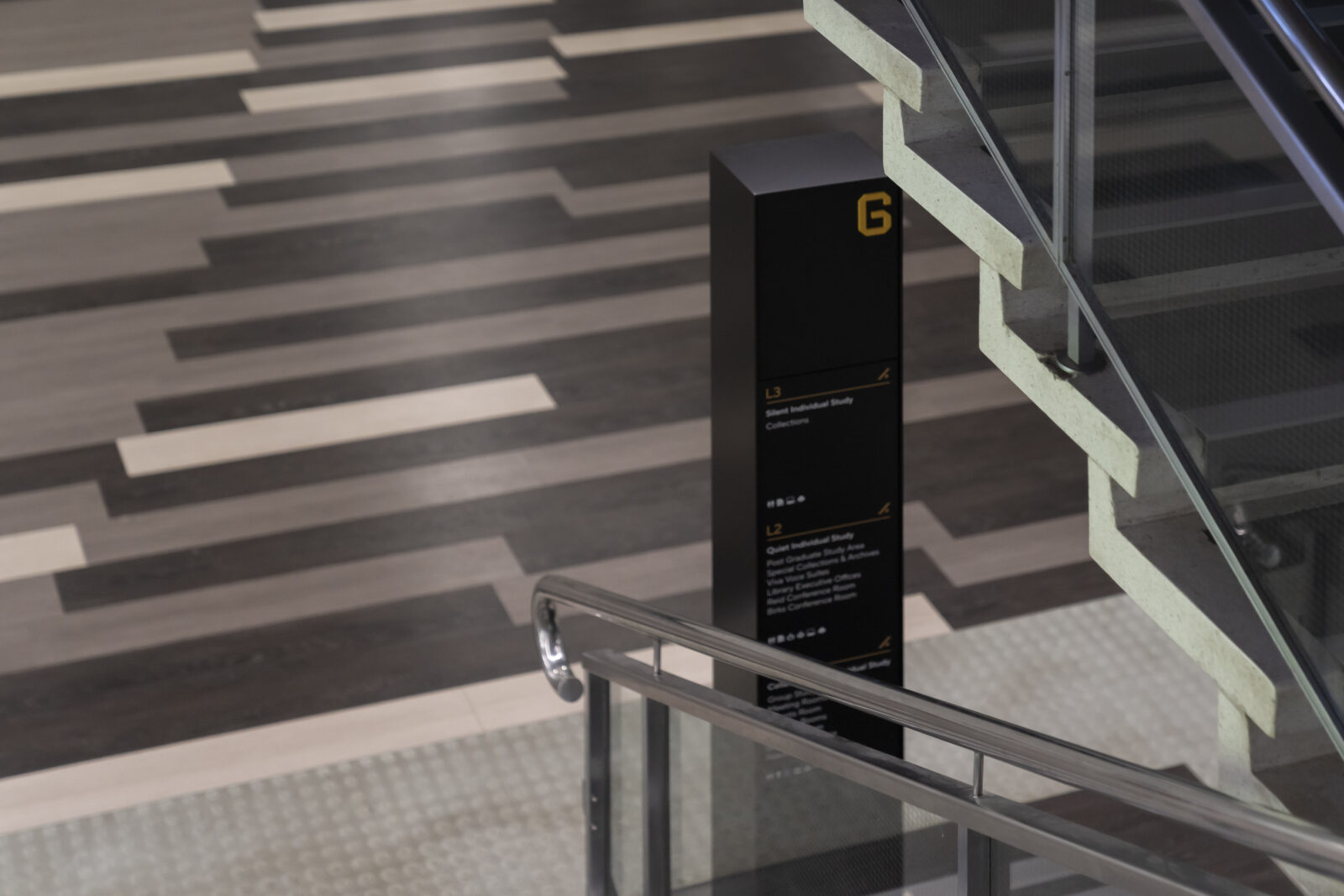
Each level carries its own colour identity drawn from the environmental graphic of that floor and calibrated to work in sympathy with the materials and finishes palette of the interior fitout. These are not arbitrary accent colours, but a system of differentiation that allows the visitor to feel, at a glance, where they are in the building’s landscape. Colour becomes a layer of wayfinding in its own right, it is intuitive, atmospheric, and quietly guiding.
Signage That Belongs
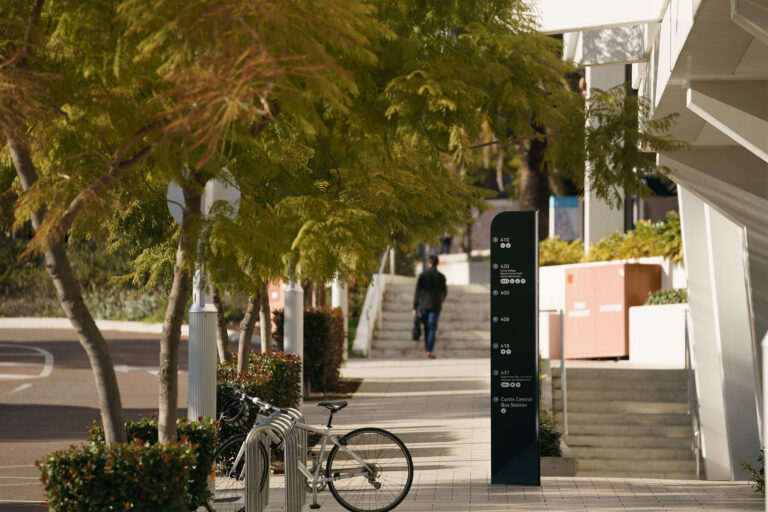
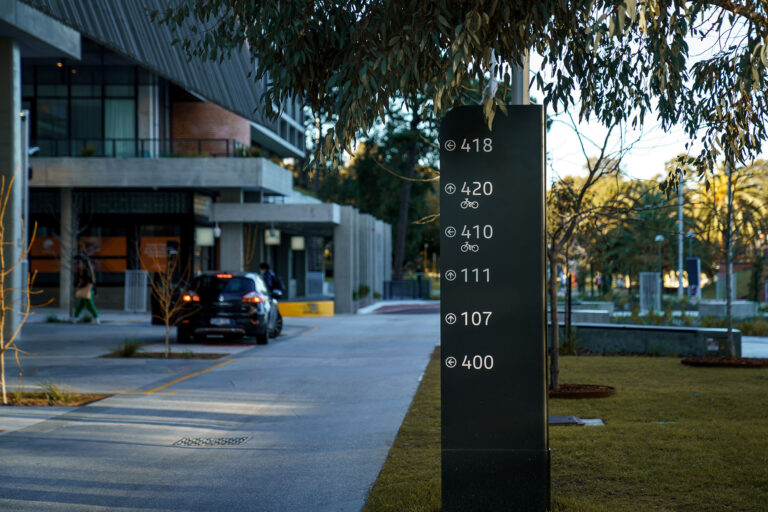
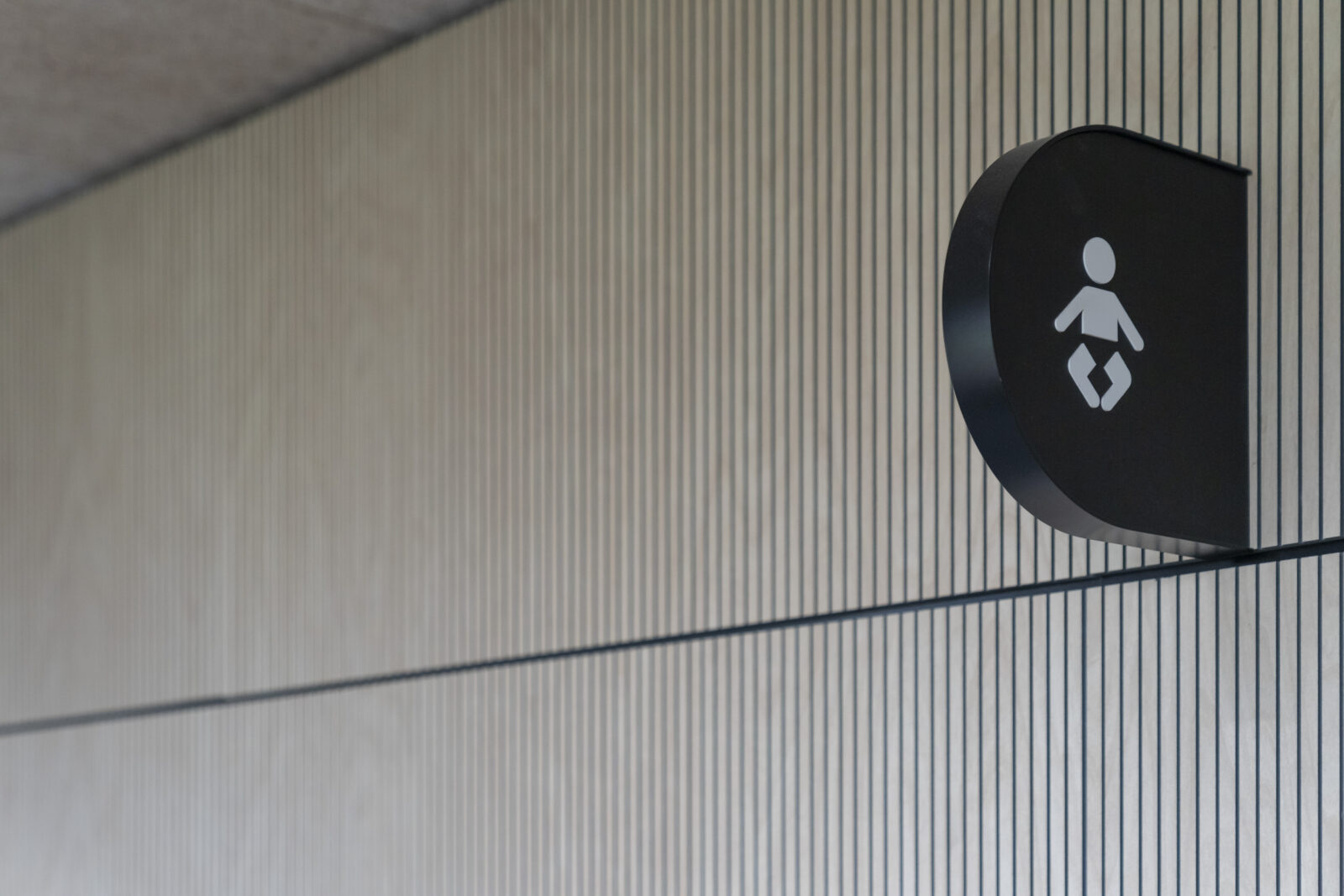
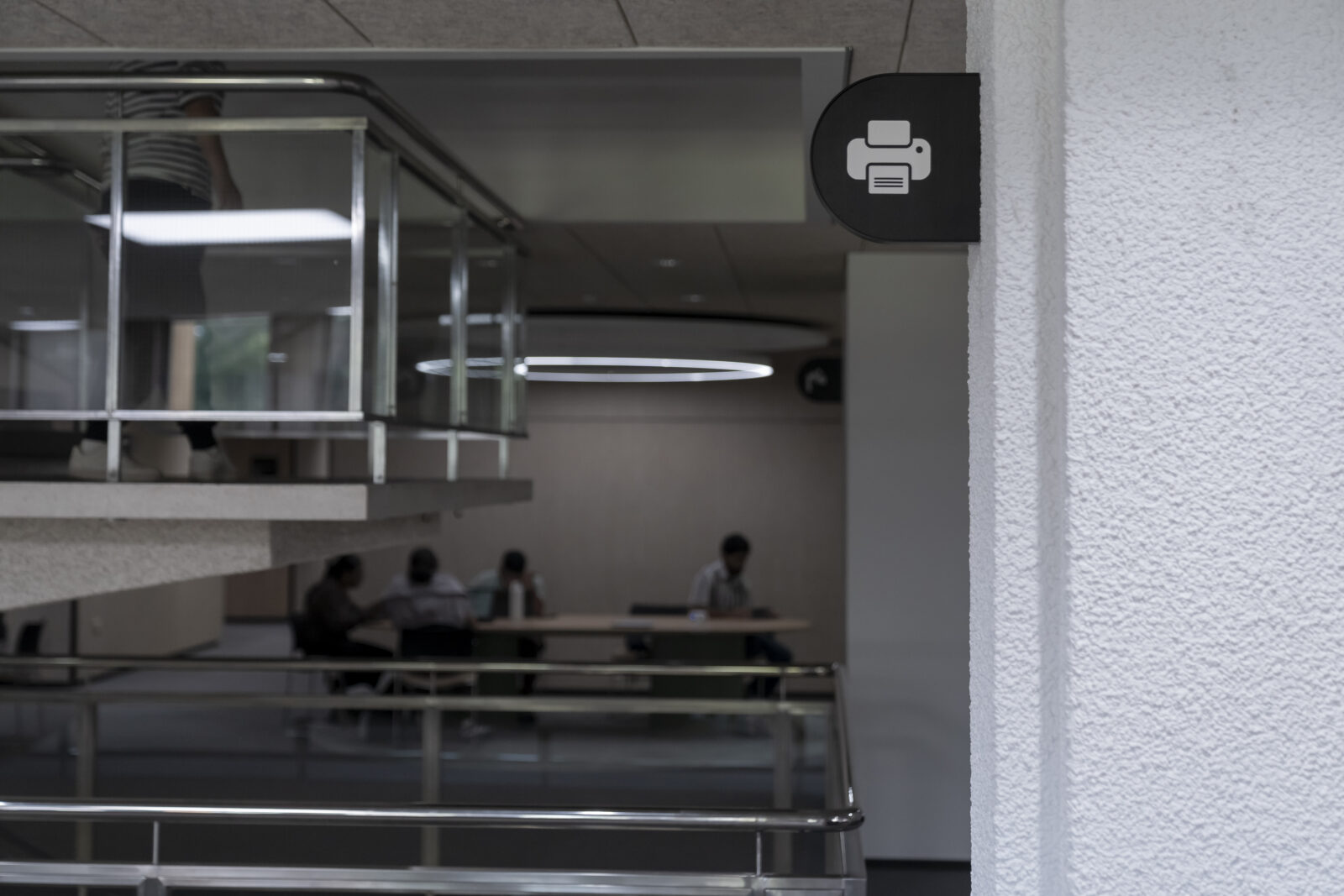
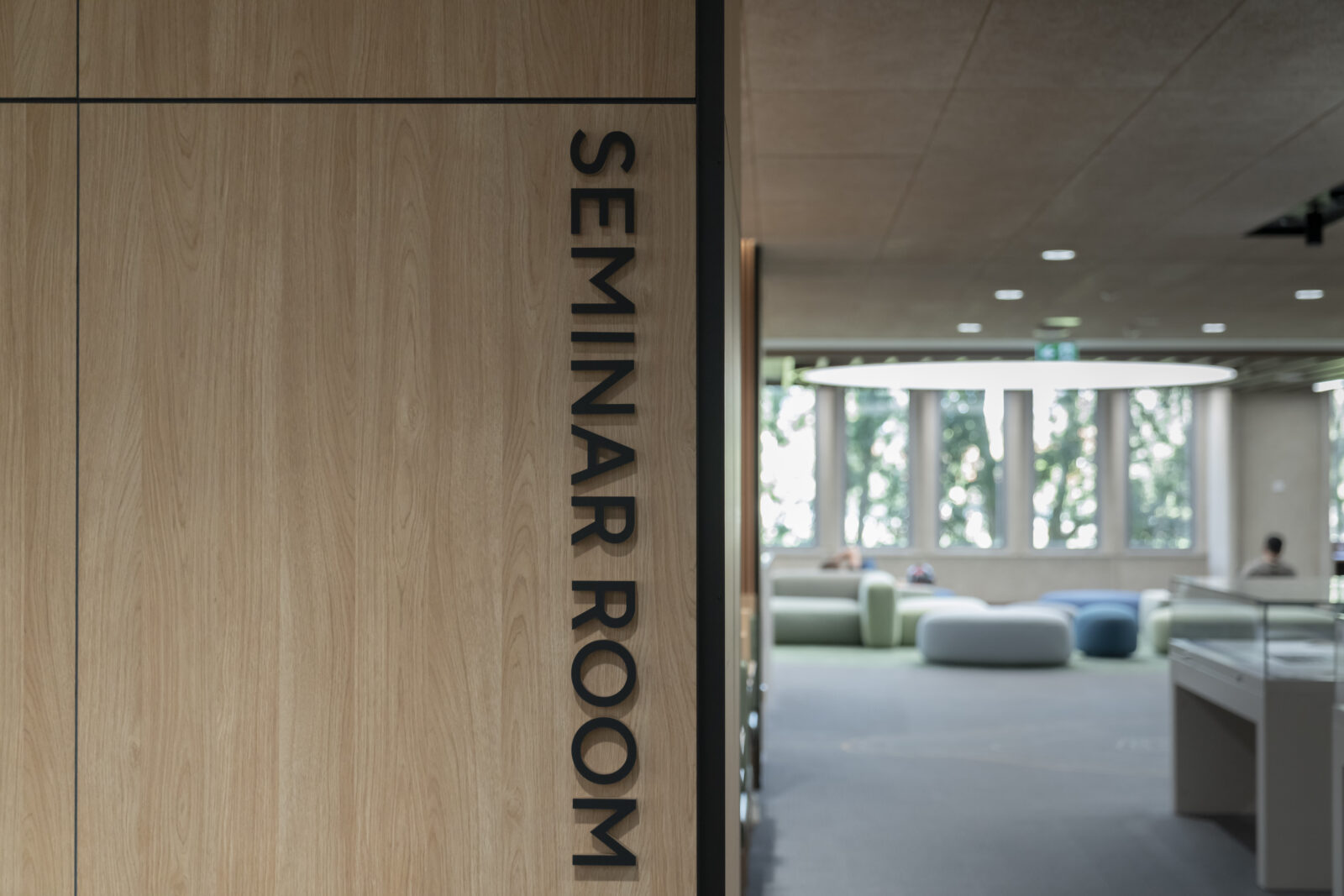
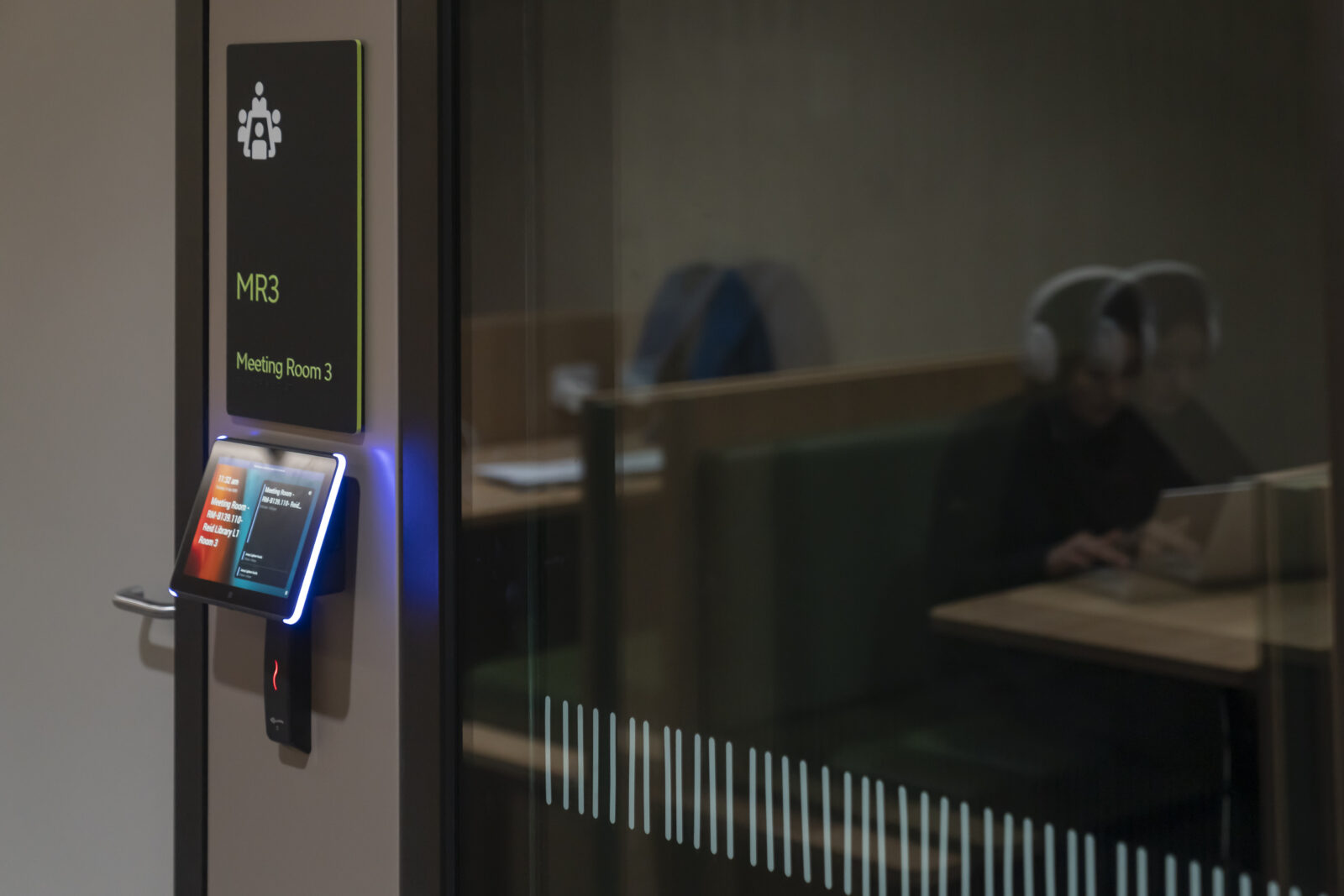
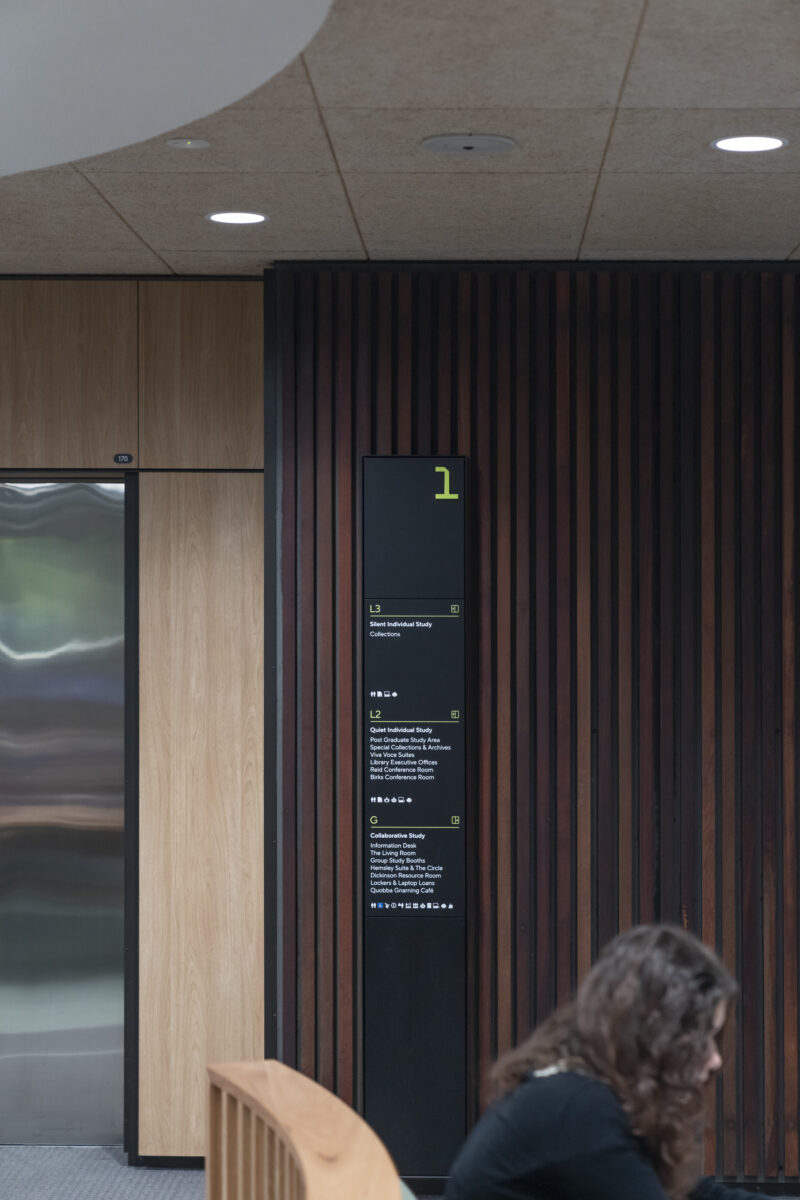
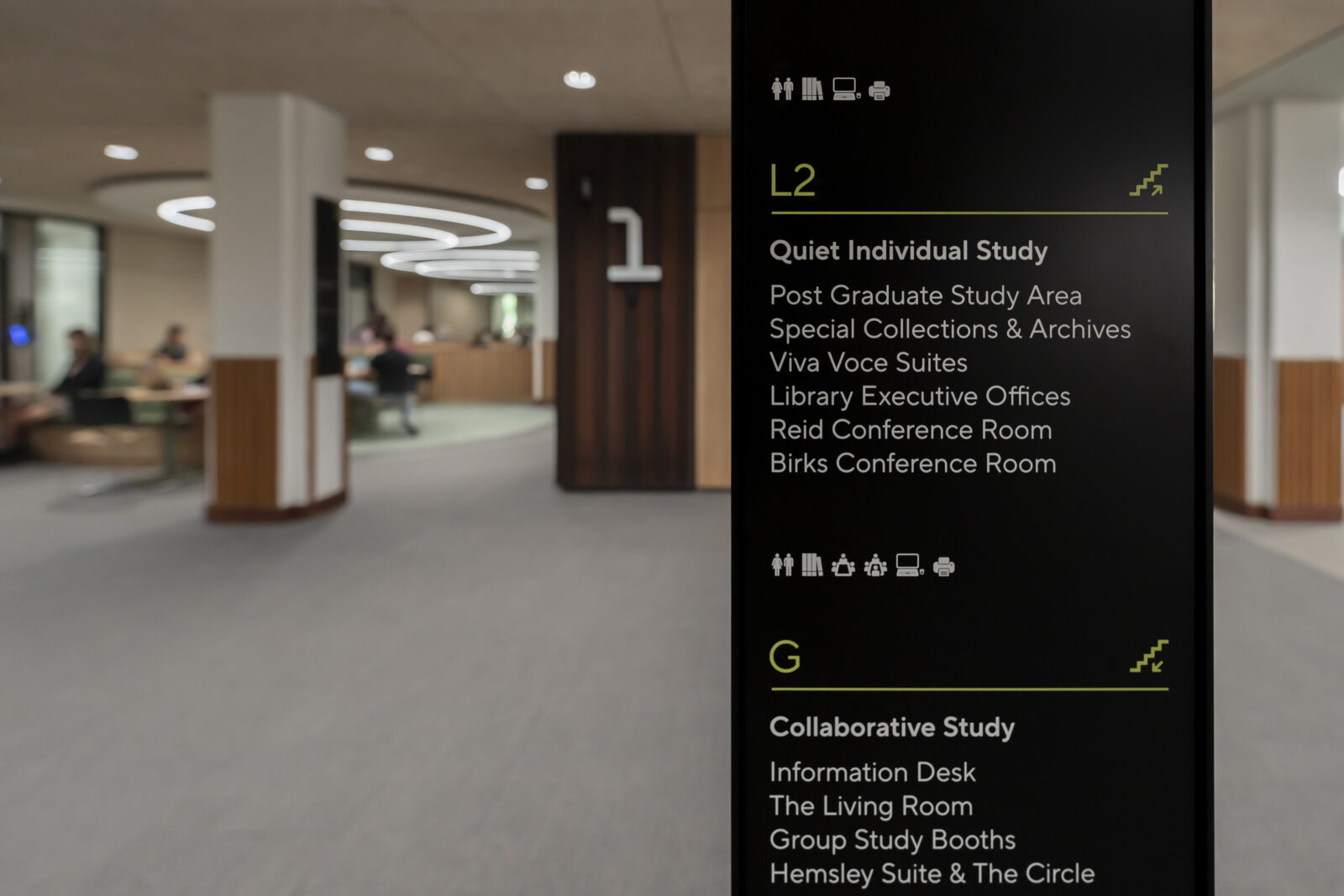
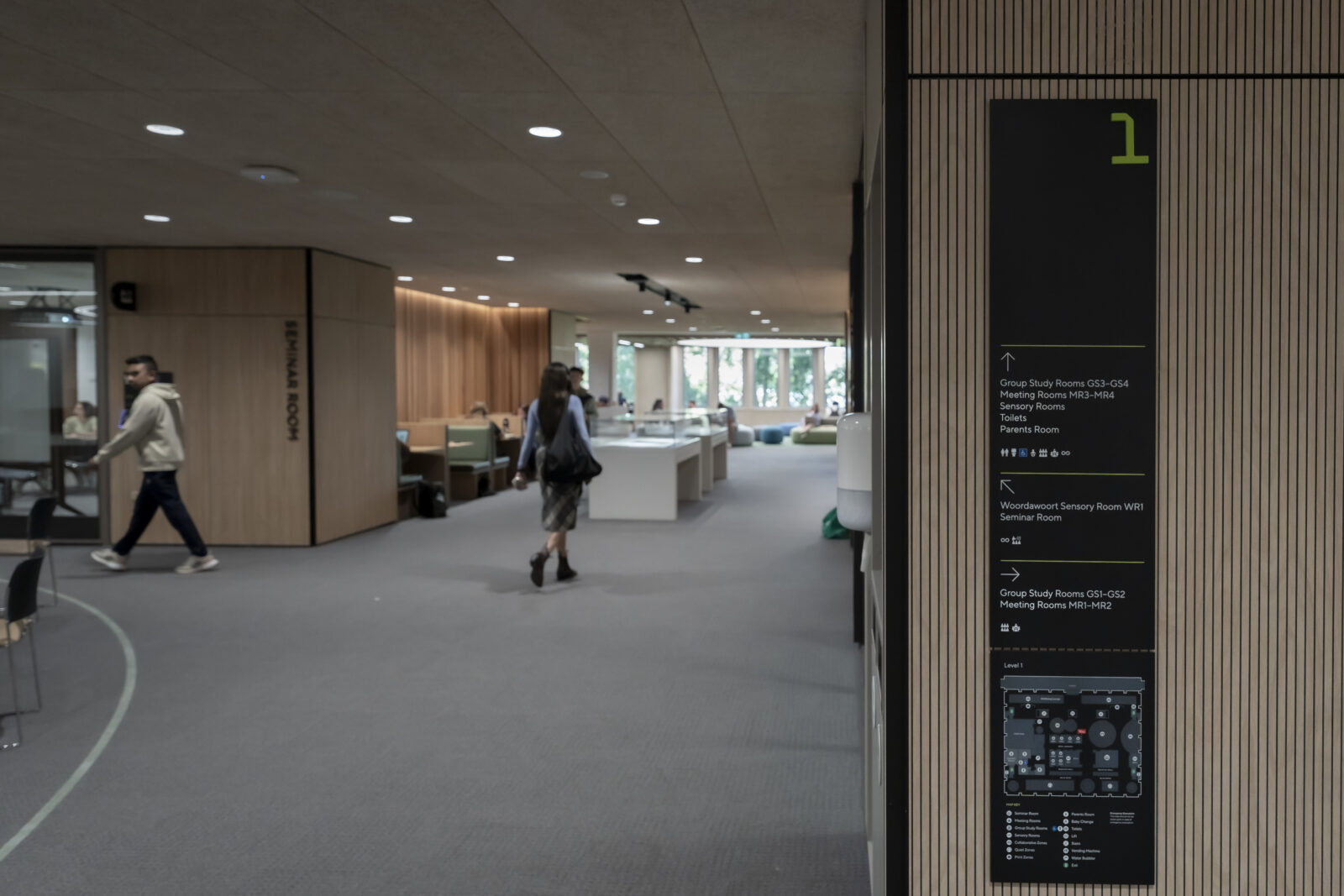
Underpinning the entire wayfinding signage strategy is a commitment to inclusion and accessibility. Wayfinding signage has been designed not as an overlay applied to the space, but as an element integrated within the built fabric itself, embedded, considered, and human in scale. Visual cues support the self-navigating visitor at every turn, ensuring that the journey through the library is legible to all, regardless of ability or familiarity with the space.